Pre-procedure guidelines
(for lips, eyes, eyebrows)
-
Avoid tanning for at least 1 week before the procedure (sun and sunbed).
-
1 hour before the procedure, do not drink coffee, tea, or energy drinks, and do not smoke or consume alcohol (so that the anaesthetic works more effectively and the procedure is less sensitive).
-
For lip procedures: if you have had herpes before, it is recommended to start anti-herpes medication from the day of the procedure after consulting your doctor.
-
For eye procedures: false eyelashes must be removed before the procedure.
-
For eyebrow procedures: eyebrows must not be tinted with henna or chemical dyes for at least 1 week before the procedure.
-
In the area of the procedure (eyebrows, eyelids, lips), the skin must be healthy: active inflammation, signs of herpes, or other skin conditions are not allowed.
-
For lip procedures, the lips must be healthy and moisturised: if the lips are dry or cracked, the procedure cannot be performed until they have healed. It is recommended to moisturise them with a lip balm or panthenol for at least a few days before the procedure.

Guidelines
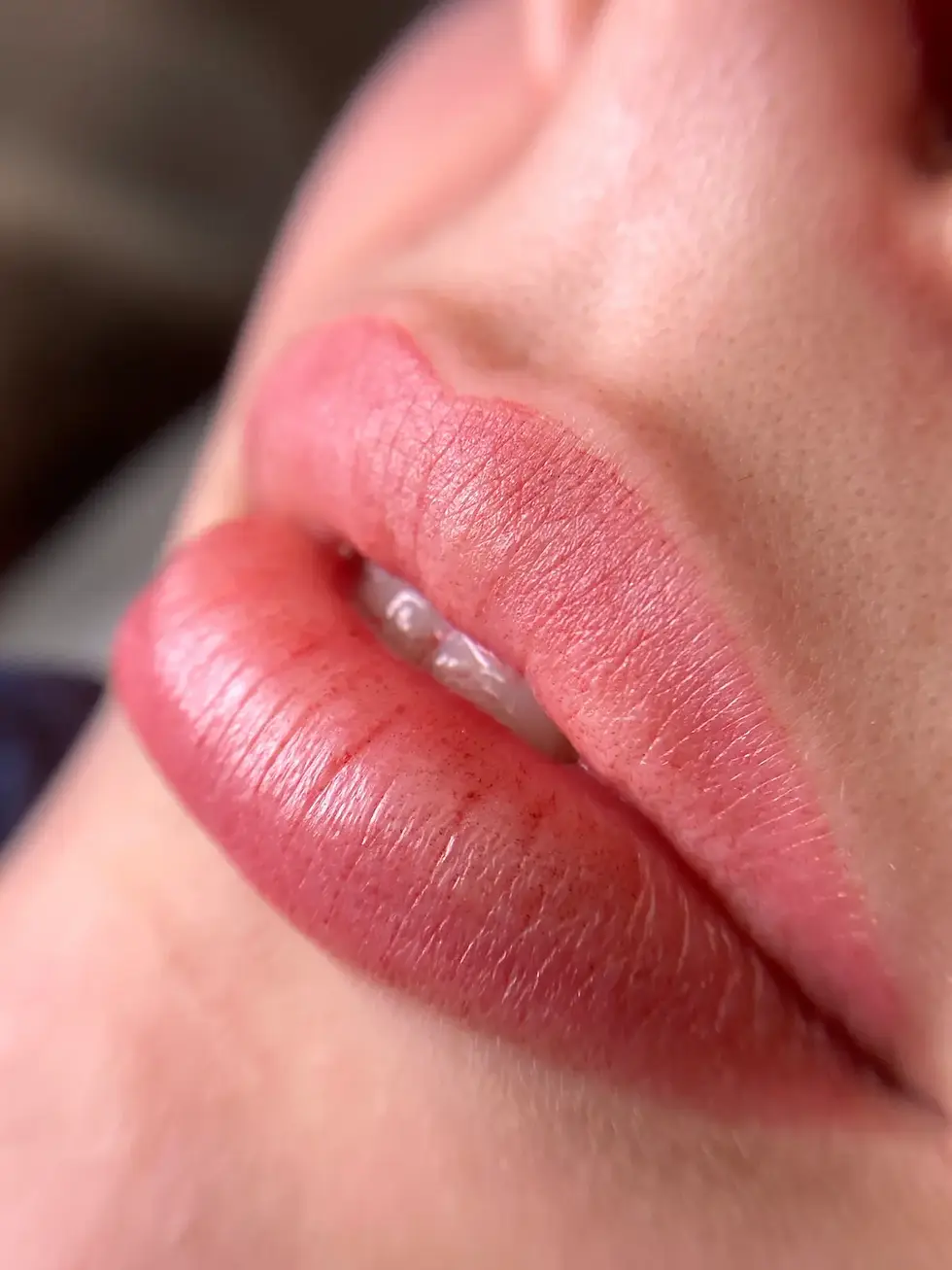
Lip aftercare
-
On the day of the procedure, avoid excessive liquids, salty food, and spicy food (to help prevent significant swelling).
-
Starting from the day of the procedure and for the next 4-5 days (until the scab falls off), it is recommended, in accordance with your doctor’s advice, to take anti-herpes tablets to prevent herpes, which may affect pigment retention.
-
From the day after the procedure and for as long as the scab is present, apply petroleum jelly regularly throughout the day (only a very small amount to relieve dryness).
-
Peeling or picking the scab is strictly forbidden (as this may remove the scab along with the pigment, which can leave gaps without pigment in the treated area). It is also not recommended to smile widely or take large bites until the scab has fallen off.
-
Soaking the scab is strictly forbidden. When brushing your teeth, make sure toothpaste does not touch the pigmented area. Dental floss and mouthwash may only be used again once the scab has come off (to ensure the area does not get wet or rubbed).
-
Alcoholic beverages are prohibited on the day of the procedure. If you are taking tablets containing acyclovir, alcohol must not be consumed during the entire course of treatment.
-
For 1-2 days, avoid intensive exercise and activities that cause excessive sweating.
-
While the scab is present, avoid saunas, steam rooms, swimming pools, natural bodies of water, and long hot showers (steam moistens the scab), as this causes sweating and moisture in the pigmented area, which can delay healing and lead to pigment loss (leaving gaps without pigment in the treated area).
-
While the scab is present, sun exposure is prohibited (sunbeds and direct sun). UV radiation can fade the color and cause the shade to heal unevenly.
-
For the first 4 weeks after the procedure, tanning the pigmented area is not recommended (the pigment lies very close to the upper layer of the skin and may fade).
-
Whenever going into the sun or using a sunbed, always apply SPF sunscreen to the pigmented area (this helps the pigment last longer and prevents fading).
-
In case of swelling, only dry cold compresses may be used if necessary (place a paper tissue between the treated area and the cold source to make sure the scab does not get wet).
-
The color may look lighter immediately after the scab falls off. The final result is visible about one month after the procedure, when it is possible to assess whether a touch-up is needed - whether the pigment has healed evenly and smoothly or whether it needs to be intensified. If you are satisfied with the result, no touch-up is required.
Eyelid aftercare
-
After the procedure and for the next ~7 days, ensure “dry healing” (do not soak the new design).
-
Peeling or picking the scab is strictly forbidden (as this may remove the scab together with the pigment, leaving gaps without pigment in the treated area).
-
Soaking the scab is strictly forbidden (until everything has fully flaked off). Therefore, do not use mascara during the entire healing period.
-
Alcoholic beverages are prohibited on the day of the procedure (this stimulates lymph release, which may affect even pigment retention). Also avoid excessive liquids, salty food, and spicy food on the day of the procedure and the following day! (this stimulates lymph flow)
-
On the day of the procedure and for at least 1 day afterwards, intensive exercise and activities that cause excessive sweating are prohibited.
-
While the scab is present, avoid saunas, steam rooms, swimming pools, natural bodies of water, and long hot showers (steam moistens the scab), as this causes sweating and moisture in the pigmented area, which can delay healing and lead to pigment loss (leaving gaps without pigment in the treated area).
-
While the scab is present, sun exposure is prohibited (sunbeds and direct sun). UV radiation can fade the colour and cause the shade to heal unevenly.
-
For the first 4 weeks after the procedure, tanning the pigmented area is not recommended (the pigment lies very close to the upper layer of the skin and may fade).
-
In the case of eye procedures, the greatest swelling may occur the next morning and then gradually decrease. In case of discomfort, after consulting your doctor, you may use: Ibumetin, and in case of swelling - anti-allergy medication such as Tavegyl, Zyrtec, or Fenkarol.
-
In case of swelling, only dry cold compresses may be used if necessary (place a paper tissue between the treated area and the cold source to make sure the scab does not get wet).
-
The colour may look lighter immediately after the scab falls off. The final result is visible about one month after the procedure, when it is possible to assess whether a touch-up is needed - whether the pigment has healed evenly and smoothly or whether it needs to be intensified. If you are satisfied with the result, no touch-up is required.


Eyebrow aftercare
-
For the next ~3 days after the procedure, do not apply anything to the eyebrows. Allow them to dry as much as possible. If needed, start using Bepanthen cream 1-2 times a day from approximately day 4 after the procedure (apply only a very small amount using light pressing motions to relieve dryness).
-
Peeling or picking the scab is strictly forbidden (as this may remove the scab together with the pigment, leaving gaps without pigment in the treated area).
-
Soaking the scab is strictly forbidden (until everything has fully flaked off).
-
Alcoholic beverages are prohibited on the day of the procedure (this stimulates lymph release, which may affect even pigment retention).
-
On the day of the procedure and for at least 1 day afterwards, intensive exercise and activities that cause excessive sweating are prohibited.
-
While the scab is present, avoid saunas, steam rooms, swimming pools, natural bodies of water, and long hot showers (steam moistens the scab), as this causes sweating and moisture in the pigmented area, which can delay healing and lead to pigment loss (leaving gaps without pigment in the treated area).
-
While the scab is present, sun exposure is prohibited (sunbeds and direct sun). UV radiation can fade the colour and cause the shade to heal unevenly.
-
For the first 4 weeks after the procedure, tanning the pigmented area is not recommended (the pigment lies very close to the upper layer of the skin and may fade).
-
Whenever going into the sun or using a sunbed, always apply SPF sunscreen to the pigmented area (this helps the pigment last longer and prevents fading).
-
The colour may look lighter immediately after the scab falls off. The final result is visible about one month after the procedure, when it is possible to assess whether a touch-up is needed - whether the pigment has healed evenly and smoothly or whether it needs to be intensified. If you are satisfied with the result, no touch-up is required.